Algorithmic Deals
How Artificial Intelligence is Redefining Real Estate Transactions in Dubai
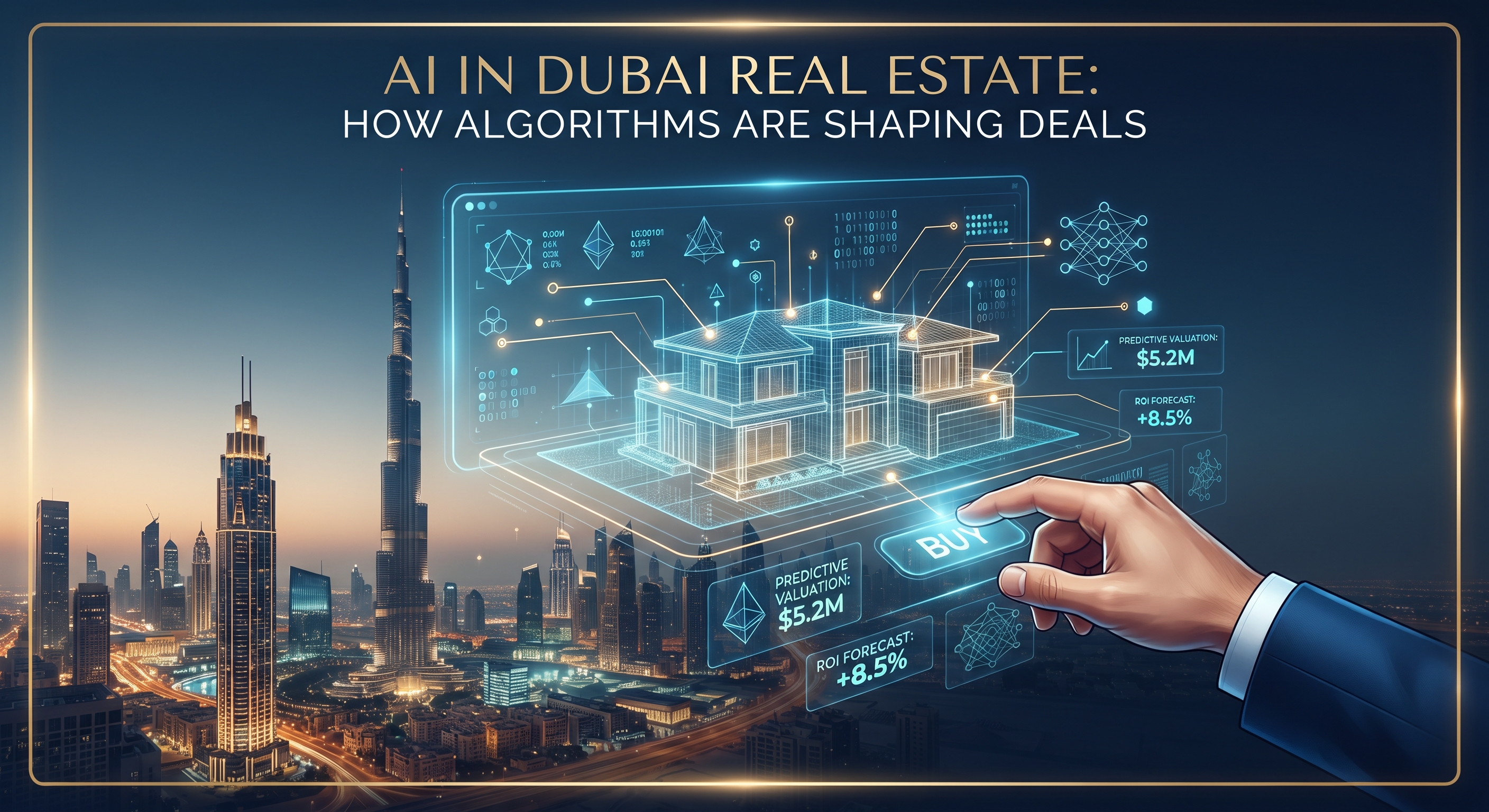
Algorithmic Deals: How Artificial Intelligence is Redefining Real Estate Transactions in Dubai
Dubai’s property market has long been defined by velocity, scale, and cross-border capital. But as annual sales volumes cross unprecedented thresholds, the traditional mechanics of buying and selling real estate are undergoing a quiet, digital overhaul.
Artificial Intelligence is no longer just powering client-facing chatbots or virtual staging. Today, machine learning models and predictive analytics are embedding themselves into the core transactional engine of Dubai real estate—changing how deals are priced, negotiated, and closed.
Here is how AI is moving from a decorative tech feature to the primary decision-maker in the Gulf's most dynamic property hub.
1. Hyper-Precision Valuation Over Speculative Pricing
Historically, property valuation in fast-moving markets like Dubai relied heavily on recent comparable sales (comps) and agent intuition—a method vulnerable to market lag and human bias.
Today’s AI-driven valuation tools process millions of data points in real time:
-
Official open transaction data provided by the Dubai Land Department (DLD).
-
Floor-level view metrics, sun exposure, and micro-location advantages.
-
Historical developer track records and infrastructure completion timelines tracked by platforms like Property Finder and Bayut.
By replacing broad estimates with granular, building-specific pricing models, AI allows buyers and sellers to agree on fair market value faster, reducing negotiation fatigue and narrowing the bid-ask spread.
2. Algorithmic Matching for International Capital
Dubai’s buyer pool is inherently global, with investors participating from Europe, Asia, and the Americas simultaneously. Matching high-intent international buyers with off-market inventory or newly launched off-plan developments used to take weeks of broker correspondence.
Modern real estate AI platforms act as matchmakers:
-
Behavioral Profiling: Algorithms analyze an investor’s portfolio parameters, risk appetite, and target yield to filter through thousands of listings instantly.
-
Predictive Inventory Allocation: Brokers receive automated signals identifying which off-plan launches align with specific international clients before public releases, drastically speeding up pre-allocation sales—a trend highlighted by proptech research from consultancy firm PwC Middle East.
3. Automated Due Diligence and Instant ROI Forecasting
Evaluating an investment property in Dubai requires assessing not just current purchase price, but projected capital appreciation and net rental yield after service charges, maintenance, and occupancy rates.
Instead of static spreadsheet calculations, generative AI models now perform dynamic financial stress testing:
-
Yield Projections: Predicting rental fluctuations based on urban planning strategies outlined in the Dubai 2040 Urban Master Plan.
-
Developer Risk Scoring: Evaluating off-plan projects by cross-referencing developer historical completion rates against macroeconomic variables.
-
Legal and Contract Review: AI document scanners analyze contract drafts (such as DLD Unified Contracts Form F, A, and B) to flag non-standard clauses, leaseback conditions, or escrow compliance issues in seconds.
The Rise of the "Hybrid Broker"
Does the rise of transaction-focused AI mean human real estate agents are becoming obsolete? Far from it.
The market in Dubai is separating into two distinct categories: traditional agents reliant on legacy networks, and technology-augmented advisors. As highlighted in property market analyses by JLL and CBRE, the latter use AI engines to generate valuation reports, handle baseline inquiries, and execute data research—freeing up 80% of their operational bandwidth to focus strictly on deal structuring, negotiation strategy, and high-touch relationship management.
"AI isn't taking the place of the real estate advisor; it is eliminating the friction between a buyer's intent and a signed contract."
What Lies Ahead: Autonomous Property Marketplaces
As Dubai continues to push for full digitization across public and private sectors through initiatives led by Smart Dubai and the Dubai Future Foundation, the property market is edging closer to seamless, data-verified transactions. The future of Dubai real estate isn't just about constructing taller towers or more ambitious luxury compounds—it's about creating a frictionless, transparent marketplace powered by intelligence.
For investors and homeowners alike, the message is clear: the most valuable tool for navigating Dubai real estate isn't just a map—it's an algorithm.