The Kingdom Opens its Doors: Why Saudi Real Estate is the Next Frontier for Global Capital
As Saudi Arabia abolishes the QFI regime, offering full market access by 2026, astute investors are looking beyond stocks to the massive potential in real estate infrastructure
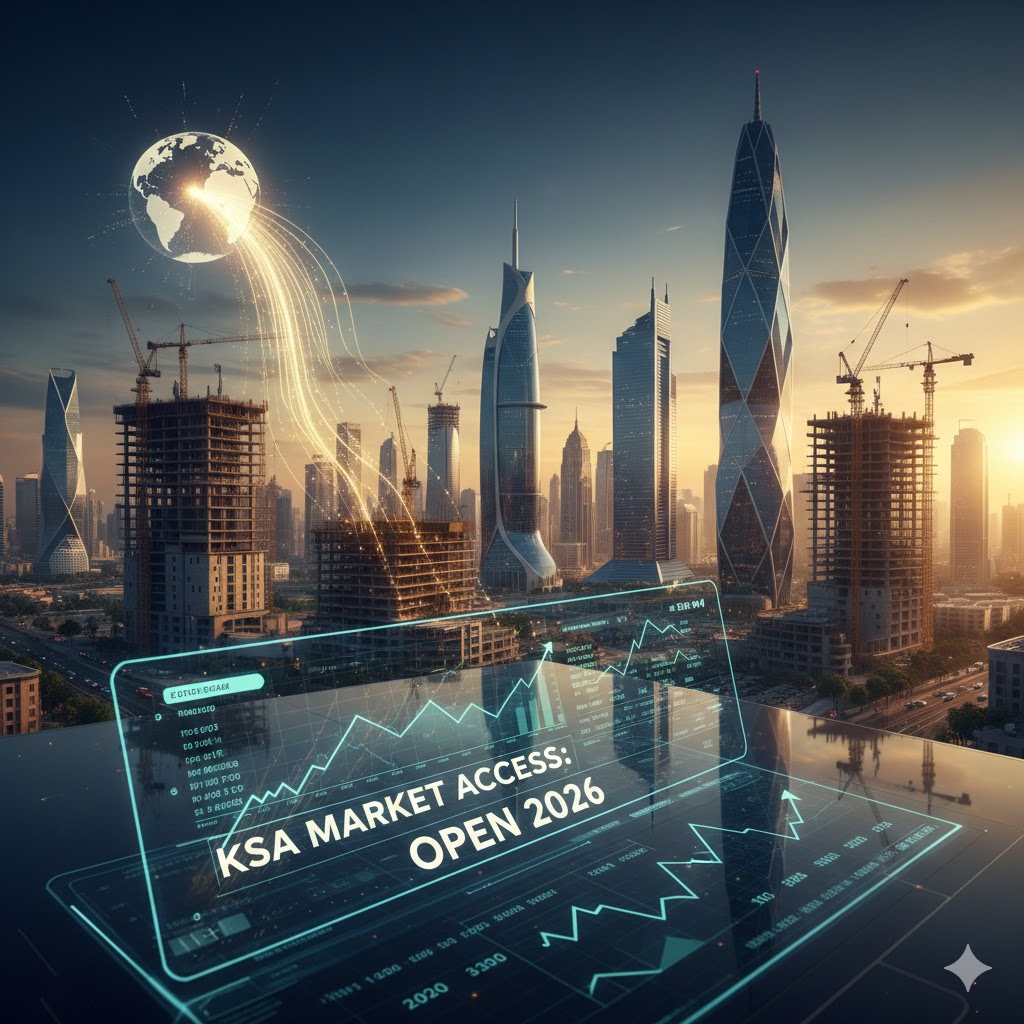
The global financial landscape is about to witness a significant tectonic shift.
On February 1, 2026, Saudi Arabia will take a decisive step in its Vision 2030 economic transformation journey by fully opening its capital markets to foreign investors.
This is more than just a regulatory update; it is the signal that the Kingdom is integrating fully into global financial flows.
For international investors, the headlines will focus on access to the Tadawul stock exchange. However, for Family Offices, Club Deals, and Private Equity funds hunting for genuine "alpha," the most compelling story lies beneath the surface of equities: the Saudi Real Estate sector.
The End of the QFI Era: Normalizing Access
Until now, direct access to the Saudi market was guarded by the Qualified Foreign Investor (QFI) regime, a structure that limited entry to a select group of large institutional players.
The new reform dismantles this barrier.
From early 2026, both institutional and retail foreign investors will have direct access through authorized intermediaries.
This move aligns Saudi Arabia’s market structure with major global financial hubs like London, New York, and Singapore.
The goal is clear: broaden the investor base, deepen market liquidity, and improve price formation efficiency.
But increased liquidity needs a destination. While Saudi listed companies will certainly benefit, a massive portion of incoming capital is earmarked for the backbone of Vision 2030: real assets.
The Global Context: The Search for Yield
To understand the magnitude of the Saudi opportunity, we must first look at the current global context.
In many mature markets—across Western Europe, North America, and parts of Asia—real estate yields have compressed significantly over the last decade.
These markets have stabilized; finding high Double-Digit ROI (Return on Investment) has become increasingly difficult without taking on excessive risk.
For Family Offices and private investors seeking growth rather than just capital preservation, these saturated markets offer few exciting prospects.
Saudi Arabia presents a stark contrast. It is currently an outlier in the best possible sense.
The Kingdom is not just opening its market; it is actively building an entire new economy.
The demand for residential, commercial, industrial, and hospitality real estate is being driven by unprecedented government spending and a rapidly growing population.
Why Real Estate is the "Alpha" Play in KSA
For investors willing to move now, before the market fully matures, the ROI potential in Saudi real estate is currently significantly higher than stabilized global averages.
Here is why smart capital is pivoting towards Saudi bricks and mortar:
1. The Vision 2030 Engine: The opening of the capital markets is designed to fund the gigantic public and private investment programs of Vision 2030. We are talking about Giga-projects, massive infrastructure overhauls, and the development of entirely new non-oil industries. Every single one of these initiatives requires real estate development.
2. A Demand-Supply Imbalance: Unlike oversaturated Western markets, many sectors in KSA are experiencing a shortage of quality supply. From high-end residential units for expatriates and a growing middle class to Grade-A office space for newly arriving multinational corporations, the demand is immediate and acute.
3. The Liquidity Wave: The 2026 market opening will unleash a wave of international liquidity. As this capital enters the Kingdom, asset prices—particularly in prime real estate—are poised for significant appreciation. Investors entering ahead of this wave stand to gain the most.
Higher Standards, Higher Confidence
Crucially, this market opening is not a "wild west" scenario. The Saudi government understands that to attract long-term, patient capital (like Family Offices), trust is essential.
The reforms are accompanied by a rigorous push towards better corporate governance, increased transparency, and financial reporting aligned with global standards. This regulatory stability is the final piece of the puzzle for institutional investors who previously viewed the market as too opaque.
Conclusion: The Window of Opportunity
The abolition of the QFI regime is a game-changer. By 2027 or 2028, as the market deepens and matures, we can expect Saudi real estate yields to begin compressing and aligning more closely with global norms.
However, the window between now and the full opening in 2026 represents a unique period of opportunity.
For Family Offices, private funds, and club deals searching for high-yield investments in a G20 economy with massive growth tailwinds, Saudi Arabia is no longer just an option; it is an essential strategic consideration.
Partner with Us for Your Saudi Market Entry
Navigating a rapidly evolving market requires more than just access; it requires on-the-ground insight. While the regulatory barriers are falling, the key to unlocking high ROI in Saudi real estate remains local expertise and strategic partnerships.
We specialize in bridging the gap between international capital and high-potential Saudi real estate assets. Whether you represent a Family Office, a Private Equity Fund, or a Club Deal structure, we can help you identify off-market opportunities before they become mainstream.
Don't wait for the yields to compress.
📩 Contact us today to discuss our current deal flow and how we can tailor a bespoke Saudi entry strategy for your portfolio.
https://avvocatobarbaradipietrantonio.com/contatti
lascia un commento